Start where light actually reaches
A plant is not a decorative object that can live anywhere indefinitely. Before choosing a striking leaf, observe the intended position in the morning, around midday and later in the afternoon. Note direct sunlight, nearby buildings, trees, blinds and seasonal changes. A window-facing room can still contain dim corners, especially far from the glass.
Match those observations to reliable guidance for the particular species. “Bright indirect light” is a description of growing conditions, not a guarantee that any spot without sun will work. If the only available position is unsuitable, change the position, investigate an appropriate grow light or use botanical art instead. Care requirements should decide whether a plant belongs there; styling decides how it joins the room.
Choose an outline, not a trend
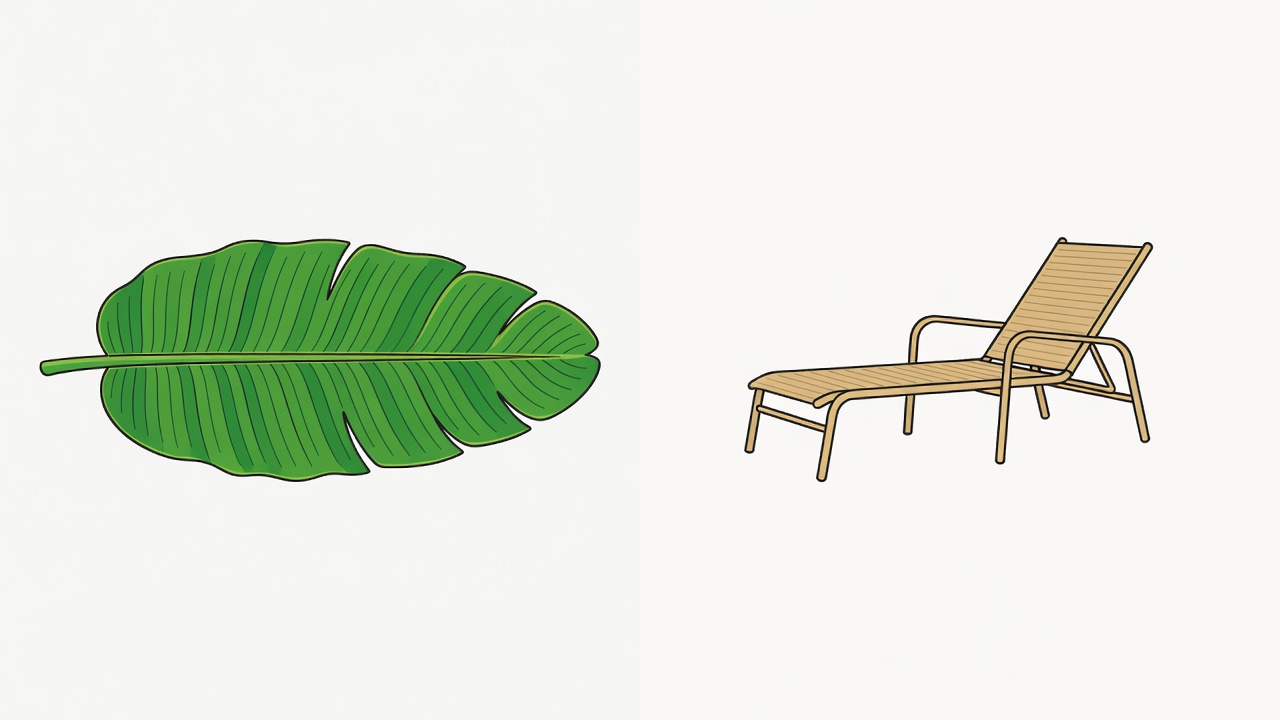
Broad leaves bring a strong, sculptural presence. Monstera deliciosa creates a spreading, irregular outline and commonly needs support as it climbs. Ficus elastica can offer a more upright structure, although its eventual size and branching depend on conditions and care. Strelitzia nicolai can become very large and needs strong light; its familiar tropical profile is not a reason to squeeze it into a small, dim room.
For a finer texture, consider whether a palm-like silhouette would suit the space better. Howea forsteriana and Chamaedorea elegans produce a different visual rhythm from a heavy, broad leaf. These examples are starting points, not interchangeable care recommendations. Research the exact plant, including mature dimensions, temperature tolerance and any safety concerns, before bringing it home.
Measure the future footprint
Use a tape measure to mark the likely canopy width as well as the container footprint. Compare this space with the seat height, chair back and nearby table. A plant that looks modest in a nursery can dominate the corner once its leaves open or it receives a climbing support. Leave room to rotate the container when appropriate, inspect leaves and remove the inner pot.
Try a temporary outline on the floor using paper or removable tape suited to your surface. Pull out the chair and open nearby doors fully. A leaf brushing the occasional curtain is one thing; a wet pot blocking an exit is another. Do not treat a decorative clearance suggestion as a building or accessibility standard. Your household’s mobility needs and applicable requirements come first.
Let the background do quiet work
A large leaf reads clearly against an uncluttered wall. If the room already contains patterned upholstery, busy shelves and many small pictures, simplifying the immediate backdrop may create more impact than buying another plant. Turn the arrangement so its outline is visible from the room’s main approach, while keeping the plant’s actual light needs in mind.
Repeat one existing finish in the pot or support. An ink-colored container can connect to a dark picture frame; a plain clay pot can echo a warm floor. Red is useful as a small graphic accent in artwork or a nearby object, not as a literal prescription for leaf color. Leave some empty surface around the arrangement so the foliage remains the subject.
Make care and safety visible
Check toxicity by exact botanical name if children or animals share the room. Monstera, Epipremnum aureum and many other familiar houseplants can be harmful if chewed. The ASPCA plant database is a useful starting point for pet checks, while the Royal Horticultural Society plant guidance can support species research. Neither replaces urgent veterinary or medical advice after an exposure.
Keep leaves away from hot radiators and avoid choosing a location that makes routine care awkward. Inspect a new plant before placing it among existing greenery. Water according to the species, potting medium and actual conditions rather than a universal calendar. The most convincing botanical room is one whose plants can remain healthy there.